
Dino Wars - Kyouryuu Oukoku e no Daibouken story
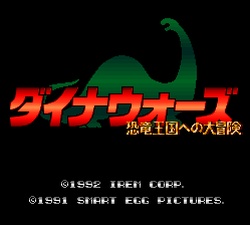
"Dino Wars — Kyouryuu Oukoku e no Daibouken" has that rare scent of adventure you recognize the second it boots: like popping in a colorful cartridge, sniffing the inky manual, and suddenly standing on the border of a Dinosaur Kingdom. It’s that very dinosaur game on the SNES, where the Super Famicom felt like a passport to a world where dinos aren’t museum props but your living, breathing neighbors on a strange planet. Around our crew it went by all sorts of names—some said “Dino Wars,” others loved the full subtitle, “A Grand Adventure to the Dinosaur Kingdom,” and sometimes it was just “Dinosaur Wars.” Call it whatever you like; one thing sticks: the itch to go beyond the horizon, where a triceratops rattles the ground with its tail and pixel predators snap their teeth.
Where this expedition began
The game sprang from a very Japanese fascination: blending a kid’s encyclopedia with a storybook quest. In the early ’90s, newsstands were stacked with mags about prehistoric beasts, and TV shows had scientists bringing the Mesozoic to life like it was a park just outside town. The developers caught that wind and carefully translated it into pixels—not a lecture, but a trek into “Kyouryuu Oukoku,” the Dinosaur Kingdom, with the hero as our guide. No stiff pomp, just an explorer’s buzz and a warm “come on, I’ll show you the trail.”
On the Super Nintendo, tales like this hit especially hard: smooth animation, lush backdrops, and a soundtrack that could be a chiptune lullaby at midnight and a brisk expedition march at dawn. The Japanese cart art, dinos filling the frame, set the mood instantly, while the manual gave you just enough world without spoiling the wonder. Dino Wars never posed as a science lesson, but it nailed the feeling—one of those vibes that sticks for years.
Why we love it
It’s the charm. The way it rides that razor-thin edge between “I want to learn new stuff” and “I want one more run.” I remember neighbors bringing the cart for the weekend, all of us crowding the TV, arguing over who’d push deeper down the trail and who’d linger under the music, tracing the level map. This kingdom didn’t overexplain—its world spoke for itself: through scenery, electro-tinged drum hits in the OST, flashes of danger, and gentle rhythm shifts. That’s why Dino Wars stuck in collections and in hearts: it bottles that kid-like “I want an expedition,” unbothered by time of day, weather, or report card.
And the names. Some preferred the clean sting of Dino Wars in Roman letters, others “Dinosaur Wars,” while true romantics unwrapped the full Japanese subtitle: “Kyouryuu Oukoku e no Daibouken,” meaning “A Grand Adventure to the Dinosaur Kingdom.” That kaleidoscope of titles didn’t confuse—it made the legend bigger. Different words, same picture in your head: a sunlit trail, sand crunching under your boots, and somewhere nearby the low rumble of a reigning predator.
How it spread worldwide
It’s a Japanese tale first: a Super Famicom launch, shop windows with carts shelved like books, rentals, and schoolyard chatter. Outside Japan it rode the import scene—gray channels, suitcases from Tokyo, trades among friends, and later, generous forum recommendations. In our parts it surfaced at flea markets alongside other rare JP SNES carts: no localization, manuals in kanji, which only fueled the curiosity. Evening comes, TV on, cart seated just right—and you’re off on a retro expedition, every find feeling personal.
Emulation chimed in later: someone found a ROM, shared a clean dump, tidy write-ups appeared, a crisp cover scan, and here and there small fan translations of hints. Retro collectors swapped notes on box variants and clippings from old mags where the game sat among other Japanese adventures. There was no big “global release”—and somehow that helped. Dino Wars stayed a discovery for its own people: not a checklist item, but a “top-shelf treasure” passed from hand to hand.
In the Russian scene it settled in as “that dinosaur game on SNES,” no extra fluff. Sometimes folks even typed “Dino Worz,” sometimes the full “Dino Wars — Kyouryuu Oukoku e no Daibouken,” but the core never changed: a trip into a childhood dream, where the kingdom doesn’t scare you off—it invites you in. That’s the nostalgia—warm, not wistful: the same buttons, the same tempo, the same flutter before the next unknown door.
Over the years, little rituals grew around it. Someone gives it pride of place in a retro shelf next to other Japan-only adventures; someone spins the soundtrack while fixing an old console; someone takes a day off once a year to open the map and stroll the familiar vistas. It’s not a loud cult favorite—it’s a quiet one, the kind you pitch to friends in a single line: “Craving dinosaurs? Take this—it’s a weekend trip.” And every time, you’re surprised again by how gently this world is built.
Zooming out, Dino Wars is part of a bigger chain from the 16-bit era—a school of adventures that were quick yet thoughtful, vivid yet cozy. We’re threading those stories together in our history so you can jump back to a time when game rooms smelled like boxboard and fresh-air optimism. And if you want the nuts and bolts of its routes and trials, we’ve got more in the gameplay section—here, let the legend breathe: the Dinosaur Kingdom is calling, and even after all these years that invitation hasn’t lost its pull.