
Dino Wars - Kyouryuu Oukoku e no Daibouken Walkthrought
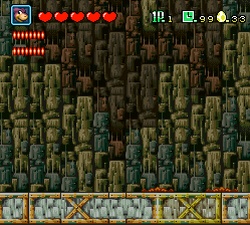
Let’s kick off where the adrenaline starts to flow: pick your duo and dive in. In 'Dinowars: The Big Adventure in the Dinosaur Kingdom' the game drills the basics from the first screen—crisp jumps and timely kid/dino swaps or you’re not making it far. In the local scene people simply called it 'DinoCity', and that habit pays off: the big buddy wins skirmishes, the kid handles buttons, levers, and tight squeezes.
Jungle: first trail, first lock
The opening stretch is a straight corridor with vines and two pits. Don’t rush the second one: there’s a ceiling switch just to the right. Hop off the dino and arc a stone into it—the hit lifts the bone gate below. Get back in the saddle and don’t leave the kid underfoot near cavemen—they love to pop out of bushes with spears. The checkpoint hides right after the rolling log coming at you—meet it mid-lane, hop over, and you’ll respawn closer to the boss.
Before the jungle boss there’s a tiny bridge of three platforms; the center one wobbles. Edge across and swat incoming birds—the dino’s hit deletes them in one touch. The boss is a beefy caveman who sprints and leaps. Stand half a body farther away than feels safe, tag him on landing, and back off. If he starts pitching rocks, duck the low ones and hop the high ones. Three or four clean exchanges and the route deeper opens up.
Caves: slick, dim, but readable
Next is a hall with droplets falling off stalactites. A droplet knocks you back—and there’s a void behind you. Lock the rhythm: one-two-three—step forward. In the right alcove is a switch that shifts a platform over the chasm. Only reachable as the kid—aim the throw straight up with a slight tilt back. Reminder: the platform is on a timer, so don’t menu-dawdle—jump immediately.
Mid-caves you’ll find a lift made of bone blocks. It runs while a floor plate is pressed. Here’s the play: dismount, park the kid on the plate, let the elevator rise, quickly remount and jump to the upper ledge. Don’t worry, the kid won’t despawn—the game is forgiving, and the plate releases the lift once you’re already up. Above is a corridor with bats—swing on timing instead of spamming or you’ll miss the low pass.
The cave boss is an airborne menace: he dives from high arcs and tries to clip you from the side. Hold center stage and strike as the beak falls past its crest—you can hear the cue right before the lunge. If your duo has a shorter reach, don’t get greedy: one hit then a quick step back. In most SNES runs players drop lives here to greed, not to the pattern itself.
Volcano: rocks with a mind of their own
First screen—three rafts of cooled lava. They sink under weight and rise once you step off. Hop in rhythm, no stopping. Up top is a door with a double lock: two tongues hang from the ceiling left and right. Trick is: dismount, lob the left one, mount fast and leap right—the aerial hit will clip the second. The timer’s tight, but you’ll nail it after a few attempts. It’s one of those moments in 'The Big Adventure in the Dinosaur Kingdom' where the game insists on duo sync.
Next is a hallway of geysers. They hiss before firing—stand half a tile farther back than feels comfy, then slide through after the steam bursts. Down below there’s a stash with a heart (extra life): get to it via a hidden wall left of the tall column where the cracks look duller. It’s one of those level secrets that feel great on repeat runs.
The volcano boss plays keep-away: lobs fireballs in arcs and likes to slip under you if you camp the edge. The safest loop is to hold him center. Roll through a fireball, close the gap, and land a single clean hit. Don’t fish for a second—his rebound flare catches careless players on flat ground. As far as “boss tips” go, this rule stays solid for the rest of the game.
Caveman Village: gadgets and buttons
Factory-style mechanics kick in here: conveyors, rising platforms, doors wired to switches. On the first screen the belt drags you into spikes. Running against it is easier as the kid, but you need the dino to swat spear-throwers on the high ground. The clean rhythm is: hop off, run to mid, remount, clear the top, dismount again. Sounds fiddly, but it’s the safest line.
The red-light door opens from a switch behind a grate. Thread a stone through the gap above—line your arc from the edge of the crate. The elevator behind the door starts immediately—don’t stand under it. This world loves “fake” levers—some do nothing, others trigger traps. The real one always chimes a short “ding”—easy to catch on headphones, so don’t miss the audio tell.
The boss rides a mechanical platform, drifting left and right and swinging a long pole. Watch for when the pole extends to the edge and snaps back—on the return the swing is short, and that’s your window to dash in for one or two precise hits. If side spikes activate, keep calm: hold the middle and don’t force the pace. After the win the game generously spits out a password—snap it if you like clearing world by world without a full reset.
Ice and Ruins: thin ice, fine touch
On the ice, inertia is the true enemy. Make your jumps shorter than usual so you don’t overshoot. Right after the first checkpoint there’s a nasty combo: a slippery bridge plus falling rocks. Move in bursts: step—pause—step. In the ruins there’s a quirky torch puzzle with three braziers. The top one only by the kid’s throw, the lower two with the dino’s smack. Light them in the correct order: middle—top—bottom. Mess up and the wall on the right resets; you’ll redo the enemy section—don’t rush, preserve the life.
The finish line is guarded by two: one tosses spears, the other does frog jumps. Split them by taking the upper platform and pick them off one by one. Don’t try to bulldoze both—damage knockback will punt you to the previous screen. In SNES runs this spot is remembered more for the required patience than for tricky jumps.
Fortress: long halls, short answers
The final world keeps the tempo with a door-labyrinth marked by symbols. Memorize the route: circle—triangle—square—back to circle. The first turret hall is all about dashes between alcoves. A turret “falls asleep” for a second after a three-shot burst—count it out loud if you must. In the room with two floor traps, the old trick saves you: leave the kid on the left plate to raise the right platform, loop around the top, come back, then pick him up when the path is open. The timer’s generous, but adds interfere—delete them with first hits and don’t eat backstabs.
Before the last door there’s a checkpoint-less corridor. This is where it’s worth burning time for insurance. In the second ceiling gap there’s a hidden alcove with a heart—reach it with a jump from the far barrel. If you drop that barrel early, no biggie: the next platform spawns a spare; just don’t smash everything at once. It’s one of those secrets and tricks that save a late-night run.
The final fight has multiple phases, but the jungle lesson still applies: don’t get greedy. On the phase with fly-by projectiles, stand on the second floor mark and only swing after the long lull in attacks. When the platform starts moving, hug the middle and don’t switch directions on the conveyor—in DinoWars it’s the direction change on a moving floor that dumps you into pits most often. Slow and steady, hit by hit, and the castle folds.
That wraps a tidy 'Dinowars' route: jungle—caves—lava fields—village—ice—fortress. If you fancy replays or need to pace yourself, world passwords save nerves, and knowing where the heart drops and hidden doors are gives that comfort run vibe. Swapping duos also freshens the route: the girl with the Triceratops has different reach—some mini-fights take a move less. But the core logic stays the same: observe, switch to the kid for those long “button throws,” and leave the heavy lifting to your dino partner. Precise, calm, and to the point—and 'DinoCity' pays you back in kind.